

Latest
Story
03 March 2026
“I arrived with nothing but my life”: Women in South Sudan describe harrowing escape from violence
Learn more
Story
13 February 2026
World Radio Day: UNESCO is rebuilding radio and reconnecting communities in South Sudan
Learn more
Story
10 February 2026
Climate change, gender inequality – and the power of partnerships in fragile contexts
Learn more
Latest
The Sustainable Development Goals in South Sudan
The Sustainable Development Goals are a global call to action to end poverty, protect the earth’s environment and climate, and ensure that people everywhere can enjoy peace and prosperity. These are also the goals the UN is working for in South Sudan:
Publication
18 January 2023
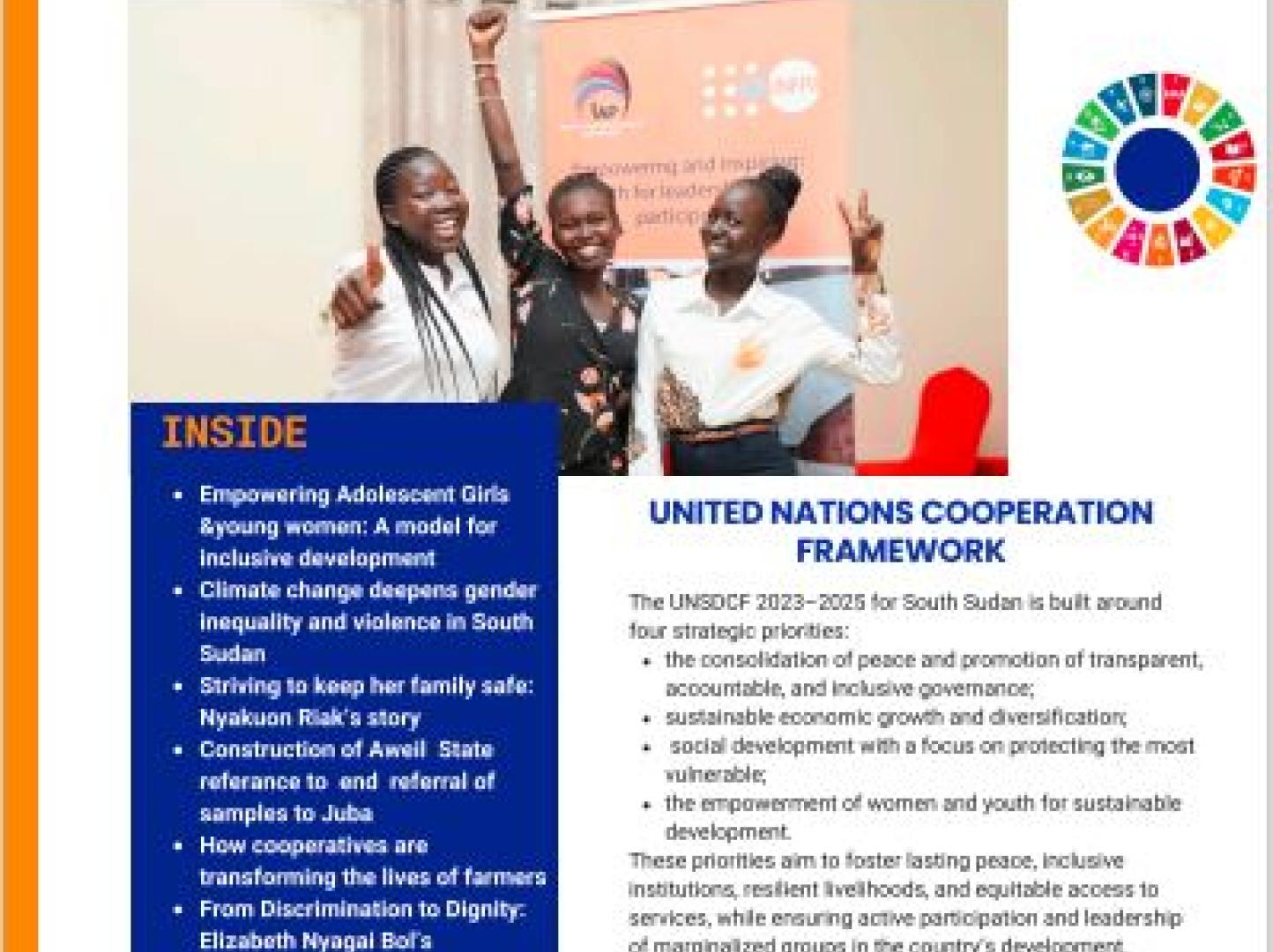
UNITED NATIONS SUSTAINABLE DEVELOPMENT COOPERATION FRAMEWORK (UNSDCF)
The UN Sustainable Development Cooperation Framework (UNSDCF) 2023-2025 is the embodiment of this commitment. Created in collaboration with representatives of the Government, civil society (including NGOs, CSOs, academia and media), the private sector as well as development partners, it is designed to address the national priorities of today as well as prepare for and advance on the bright future planned for tomorrow. It therefore contains support for implementation of the Revitalized-Agreement on the Resolution of the Conflict in South Sudan (R-ARCSS) and the Revised National Development Strategy (R-NDS) 2021-2024, with strengthened linkages to our humanitarian work under the Humanitarian Response Plan corresponding to the period of the Cooperation Framework.The UNSDCF 2023-2025 defines the collective vision and response of the UN Country Team in South Sudan to the country’s national priorities as well as the 2030 Agenda for Sustainable Development. As Resident Coordinator of the UN in South Sudan,
1 of 5
Publication
29 April 2025
South Sudan Country Annual Results 2024
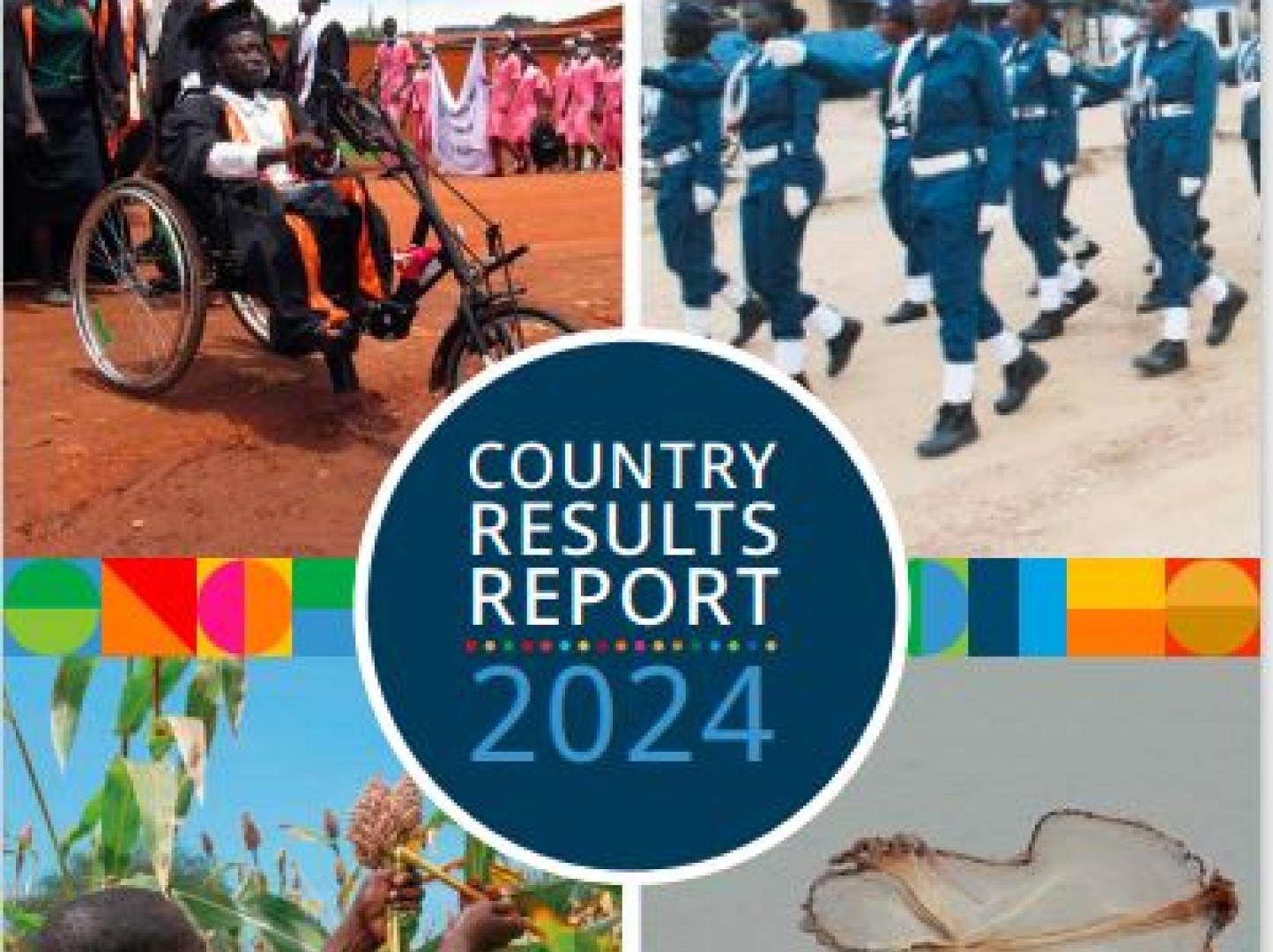
Through the United Nations Cooperation Framework, the United Nations Country Team worked closely with the government and partners to redouble efforts in advancing the Sustainable Development Goals (SDGs), focusing on four key areas: food security, climate resilience, community empowerment, including health and education and governance. In agriculture, government-led initiatives supported by the United Nations increased food production from 800,000 to over 1.1 million metric tons in 2024. Over 3 million people across 10 states benefited from livelihood support through agriculture, fisheries and livestock, enhancing both food security and resilience. In the health sector, 2.5 million children received vitamin A supplements, and 2.1 million were dewormed. Investments were made in the areas of essential medicines and financial support for government health workers, helping to maintain critical services. Additionally, 11 automatic weather stations were installed to strengthen the national early warning system and improve disaster preparedness. In the education sector, thousands of crises affected and displaced children benefited from school supplies, teacher training and safe learning spaces for over 52,000 out-of school children and supported 97,000 new enrolments in primary school, helping close critical learning gaps. On governance, civic awareness campaigns on the Constitution-Making Process Act reached over 2.1 million people. UNCT facilitated the launch of the South Sudan Women’s Charter—jointly developed with the Ministry of Gender, Child and Social Welfare and civil society organizations—to empower women to advocate for their priorities in the constitutional process and also supported the Youth Charter for the same purpose. We also contributed to South Sudan’s first-ever Voluntary National Review, which sets a baseline for tracking progress toward the SDGs and aligning national strategies with global commitments.
1 of 5

Story
16 June 2021
“A country cannot develop without empowering women,” says World Bank Regional Vice President for Eastern and Southern Africa
The World Bank Regional Vice President (RVP) for Eastern and Southern Africa, Hafez Ghanem, visited Buluk Quarter Council in Juba Municipality on his first official mission to South Sudan, where he heard first-hand testimonies from beneficiaries and community committees on the impact of the World Bank-funded South Sudan Safety Net Project (SSSNP) on people’s lives.
Implemented by the United Nations Office for Project Services (UNOPS), in partnership with the Government of the Republic of South Sudan, the SSSNP provides low-income and vulnerable households across 10 counties in South Sudan with cash assistance to meet their urgent needs and invest in their household welfare.
Ousmane Dione, World Bank Country Director for Eritrea, Ethiopia, South Sudan and Sudan; Hon. Josephine Joseph Lagu, the National Minister of Agriculture and Food Security; Hon. Lily Kapuki Jurkin, the Central Equatoria State Minister of Agriculture, Environment and Forestry, John Ogoto Kanisio, Undersecretary of Ministry of Agriculture and Food Insecurity and Husam Abudagga, World Bank Country Manager for South Sudan accompanied the RVP during the site visit, which provided an eye-opening experience on how the SSSNP is helping to rebuild lives and livelihoods of the communities.
Speaking at the event, the World Bank Regional Vice President Hafez Ghanem, expressed his appreciation for the partnership between the World Bank, UNOPS and the South Sudan Government towards addressing economic vulnerabilities in the country. “I am happy to hear that you have used the money to buy food for your families, pay school fees for your children and invest some of it in sustainable businesses. You are responsible citizens, mothers and leaders of your community. A country cannot develop without empowering women,” he said.
The National Minister of Agriculture and Food Security, Hon. Josephine Joseph Lagu, appreciated the support from the World Bank and UNOPS towards transforming the lives of the poor in South Sudan. “With the cash they received they have done a lot for their families. This is remarkable and we greatly appreciate them for this. This is the spirit we’d like to cultivate in our people,” she said.
The Central Equatoria State Minister of Agriculture, Environment and Forestry Hon. Lily Kapuki Jurkin thanked the World Bank and UNOPS for involving the state government in the implementation of the project and for building the capacity of government institutions to implement similar projects in future. “We appreciate your efforts in building the capacity of government institutions to be confident and capable of delivering services to the people of South Sudan,” she said.
The Acting Head of Programmes of UNOPS and Senior Project Manager of the SSSNP, Leslie Mhara said after the visit, “In order to tackle the impact of COVID- 19 and foster economic recovery, UNOPS is committed to working with the World Bank and the Government of the Republic of South Sudan. Cash transfers present a cost-efficient way to support the most vulnerable, contributing to market systems by increasing the purchasing power of community members.”
Speaking on behalf of the beneficiaries, Ms. Josephine Justin Ladu, a widow and sole breadwinner for her family, appreciated the assistance from the project, “The project started during COVID-19 pandemic, a period when life was extremely hard. Most women struggled to take care of their families. From the project, I was able to put food on the table and started a small business to sustain my family. I also used the money to buy materials to teach my daughters beadwork so that they will cater for some of their scholastic needs.”
The SSSNP targets poor and vulnerable households, especially those headed by women. So far, the project has distributed cash to over 15,000 households in Juba and will reach 50,000 additional households in the coming months in Pibor, Bor, Tonj South, Kapoeta East, Gogrial West, Torit, and 3 new counties yet to be identified.
1 of 5

Publication
04 July 2022
South Sudan Business Operations Strategy 2019-2021 Report
The BOS focuses on common services that are implemented jointly or delivered by one UN entity on behalf of one or more other UN entities. Common services for future collaboration were identified in the areas of Common Human Resources services, Common Finance services, Common Procurement services, Common Administration services and including common Facilities/Premises, Common ICT services, Common Logistics services. The following UN Agencies are participating in the South Sudan BOS: ILO, IFAD, UNS- DSS, UNS - UNMISS, UNS - UNODC, UN, UNDP, UNESCO, UNS - OHCHR, IOM, UNS - OCHA, UNAIDS, UNFPA, UNS - UN Habitat, UNHCR, UNICEF, UNIDO, UNOPS, UNS - UNEP, UN WOMEN, WHO, WFP, FAO, UNS- RCOs.
1 of 5
Publication
16 September 2025
UNCT Newsletter Quarter 2
Highlights from this edition include:Rooted in Hope: one man’s vision for a greener ground in South SudanScaling solar irrigation for Climate Resilient AgricultureSouth Sudan’s climate hit farmers find lifeline in healthier livestockUNOPS sign landmark Agreement with MGCSW for the construction of Ministry Headquarters, Women’s economic empowerment centers and safe house.Rebuilding Malakal with Youth & Women at the Heart of RecoveryWorld Refugee Day unites communities in South SudanMy Girls: a teacher’s mission to empower children From Hunting for work to entrepreneurship: UNICEF’s cash plus transforms lives Saving lives & safeguarding mothers during childbirth in South Sudan: a midwife’s poignant collection
1 of 5

Story
03 March 2026
“I arrived with nothing but my life”: Women in South Sudan describe harrowing escape from violence
JONGLEI STATE, South Sudan – “I left at night, crawling to avoid the crossfire,” said Rachiel, a mother of seven from Baidit, in South Sudan’s Jonglei State. “It took me two days to reach safety – I arrived with nothing but my life.”After fleeing an upsurge in violence that has broken out in recent months, Rachiel, 55, and her family are staying with relatives in Pagook.Since the start of the year, some 370,000 people in South Sudan have been forced to leave their homes, more than 280,000 in Jonglei alone. Most fled with only the clothes they were wearing and have no food, shelter or healthcare access; over the past week, at least 16 health facilities have been looted, destroyed or forced to close, making it even harder to reach critical support.Grace, a 45-year-old mother of five, described the terror as chaos erupted around her home.“We escaped with nothing,” she told UNFPA, the United Nations Population Fund, which is the UN’s sexual and reproductive health agency. “Without this centre, many families would have nowhere else to turn” – Nyalueth Both women were waiting to be seen at the Pagook healthcare centre in Baidit, where UNFPA is working with partners to provide essential sexual and reproductive health services and life-saving medical supplies.UNFPA estimates there are over 440,000 pregnant women in South Sudan, who for the most part cannot reach any antenatal or child birth assistance. This puts them and their newborns at greater risk of death, disease and complications, especially as living conditions deteriorate.Outside the clinic, the queue kept growing. “Without this center, many families would have nowhere else to turn,” said Nyalueth, 30, a mother of six also waiting to see a health worker.Health services brought to the brink As the crisis continues to spiral, some 26,000 people have also arrived in Mingkaman, in the neighboring Lakes State, in search of refuge. “I don’t have soap, milk for my baby, a mosquito net or sleeping mat,” said a 30-year-old new mother who had fled from Twic East County in Jonglei State. “My child is not feeling well, but I don’t know where the health facility is.” Three quarters of the population of South Sudan already live below the poverty line, and two thirds are in need of humanitarian assistance. In addition to severe hunger and the cholera outbreaks, severe floods frequently cut off entire communities, meaning pregnant women must wade through waterlogged terrain to reach care. Now in the latest fighting, ambulances and medical equipment have been seized and humanitarians prevented from reaching people in need, while ongoing arrivals of refugees and returnees from neighboring Sudan are further stressing a struggling healthcare network. “We have supplies to last maybe not even two months” – Health worker, Mingkaman“Currently we are seeing about 80 to 90 pregnant women per day at the antenatal clinic, with up to eight deliveries per day,” said one health worker in Mingkaman. “This was not the case before the crisis in Jonglei – the increase has created a heavy workload on the few staff and strained our limited resources. We have supplies to last maybe not even two months.” Martha* fled with her five children to Mingkaman and is currently camping on the premises of a primary school. “We escaped the terrible gunshots, but we are left with nothing in our hands. There is no food, no shelter, no hygiene – I am worried for my daughters’ well-being,” she told UNFPA. “We are staying under trees. Children are starving and sick with coughs and fever.”UNFPA responding despite severe constraints UNFPA is assisting with airlifting medical supplies to Akobo, Bor, Pibor and Mingkaman, and all its supported health facilities in these areas are operational. Despite the danger and challenges, three mobile health teams are managing to reach remote communities with vital maternal and reproductive services, and seven women and girls’ safe spaces offer survivors of violence a place to heal. “Services don’t stop for conflict” – JohnThere are mounting reports of gender-based violence against displaced women and girls, as they are cut off from support networks and protection mechanisms are crumbling. UNFPA is coordinating with partners to ensure response and protection across northern Jonglei, sending skilled health workers and providing post-rape treatment kits and other essential supplies. “Services don’t stop for conflict,” said John, 45, a gender-based violence response officer at the clinic in Pagook. “We have not stopped working – even during the current conflict, we carry on.” South Sudan is one of the world’s most underfunded humanitarian crises, with an immediate and long-lasting impact on the individual realities of the country’s women and girls. As health centres and safe spaces close down, there are fewer options for safe deliveries and to ensure survivors’ safety – and dwindling chances for girls to stay to decide their own futures.UNFPA’s response to the crisis has been possible thanks to support from the UN’s Central Emergency Response Fund, the European Union's Humanitarian Aid Office (ECHO), the Republic of Korea's International Cooperation Agency (KOICA), and the South Sudan Humanitarian Fund led by OCHA. *Name changed for privacy and protection
1 of 5

Story
13 February 2026
World Radio Day: UNESCO is rebuilding radio and reconnecting communities in South Sudan
UNESCO and partners in South Sudan are enhancing access to information for communities across the country. With support from the Government of Japan, five community and local radio stations are being renovated and rebuilt.In South Sudan, radio remains one of the most important and reliable ways people access information. Across towns and counties, it carries news, public announcements, local conversations, and music in many of the country’s languages. Travelling across the country can be difficult and internet access remains limited, but radio airwaves continue to connect communities in ways few other communications platforms can.This year’s World Radio Day comes at a significant moment. South Sudan continues to navigate the effects of conflict, economic crises, climate shocks, and displacement, even as efforts toward peace and sustainable development move forward.In a country still grappling with conflict, radio plays an important role in promoting peace and encouraging dialogue within and between communities. With national elections scheduled for December 2026, access to accurate and trusted information is increasingly important, enabling citizens to engage meaningfully in a key democratic process.Community radio is coming to Terekeka CountyIn Central Equatoria, work has begun in Terekeka County to establish the area’s first community radio station. UNESCO recently handed over the designated site where a currently unused building will be transformed into Terekeka Community Radio in the coming months.Community representatives attended the site handover to contractors in January 2026, including members of the Commissioner’s office, radio board members, station volunteers, elders, youth leaders, and women leaders.Terekeka County is home to diverse communities, many of them pastoralist, with cattle camps spread across the area. For its residents, a community radio station will help connect communities that are often separated by distance and limited transport. It will also create a space for discussions about farming, livelihoods, education, and other local concerns to take place within the county itself.Even before construction began, preparations were underway. UNESCO supported the establishment of a governance board and listener club and trained young volunteers who will help manage and operate the station. Volunteers noted the training strengthened their technical skills and confidence, and they expressed hope that once the station is operational, it will improve access to information and contribute to greater stability in the area.“We have been waiting for this moment for a long time, and now we are ready to put our skills into practice to serve our community better,” said Mr. Jelle Makasi.Restoring state broadcasting in MalakalFurther north in Upper Nile State, UNESCO and partners are rebuilding a local radio station from the ground up.Media infrastructure in Malakal was severely damaged during the 2013 conflict, including the buildings of the South Sudan Broadcasting Corporation’s radio and television services. More than a decade later, communities continue to face challenges linked to limited infrastructure, displacement, and periodic insecurity.Rebuilding SSBC’s radio station marks an important step in restoring public service broadcasting in the state.Breaking ground on the site recently, Deputy Minister of Information, Communication Technology and Postal Services David Yauyau emphasized the role of the station in supporting communities:“Malakal has shown incredible resilience. Today, we are signaling to the people of Upper Nile that they are at the heart of our digital and telecommunications agenda. This radio station will serve as a mirror, reflecting local culture, languages, and stories. It will act as a bridge, connecting development directly to farmers, youth, and elders. It will also serve as a shield, protecting citizens from misinformation and hate speech.”UNESCO Representative to South Sudan, Yayoi Segi-Vltchek, reaffirmed UNESCO’s commitment to enhancing access to information and strengthening media development across the country:“In South Sudan, access to reliable and timely information is not a luxury, it is essential – and radio plays a vital role in society. It informs, connects, and creates space for women, young people, and marginalized communities to be heard. It also supports dialogue and helps communities navigate periods of change with greater confidence.” Expanding access across the countryRadio renovations are also progressing in other parts of South Sudan. In Western Bahr El Ghazal State, work has started at SSBC’s radio station in Wau. In Yambio, upgrades are underway to strengthen local broadcasting facilities. At the University of Juba, two studios are being renovated to support the university’s official radio station and provide media and journalism students with a practical space to build their skills.As South Sudan prepares for the 2026 elections, radio will continue to play a central role in informing citizens, supporting dialogue, and strengthening access to reliable information across the country.
1 of 5

Story
10 February 2026
Climate change, gender inequality – and the power of partnerships in fragile contexts
UNITED NATIONS, Madagascar, Mozambique, and South Sudan – As climate change deepens existing gender inequalities, the ClimateEmpower programme is taking on the issue of climate vulnerability in Madagascar, Mozambique, and South Sudan. ClimateEmpower is spearheaded by UNFPA – the United Nations Population Fund, which is the sexual and reproductive health agency of the UN – and Zonta International, an international non-governmental organization. UNFPA and Zonta International have been in a global partnership since 2008, supporting programs on ending obstetric fistula, accelerating action to end child marriage, and preventing gender-based violence. Recognizing that the scale and complexity of the climate crisis cannot be addressed by governments alone, the ClimateEmpower program is designed to address these challenges by engaging communities, businesses, innovators, and local enterprises to strengthen climate resilience and advance gender equality. Below are five entrenched social challenges triggered by climate change, which the initiative is confronting head-on:1. Climate-induced displacement and stress are fueling a rise in gender-based violence.Social norms that accept or justify violence in marital or dating relationships remain deeply embedded across the three ClimateEmpower countries. In Madagascar, over 40 per cent of women report experiencing intimate partner violence, with about 41 per cent of women and 28 per cent of men believing wife-beating is justified. In South Sudan, intimate partner violence is normalized due to conflict, bride price practices and patriarchal control.These attitudes are magnified under climate stress. In South Sudan, extreme weather events such as floods and droughts have disrupted livelihoods and forced displacement, intensifying intimate partner violence and sexual exploitation. A 50 per cent increase in gender-based violence incidents was noted in climate crisis-affected areas. For example, Lual, a gender-based violence prevention officer with International Medical Corps, tells UNFPA that “delay in fetching water, due to droughts exacerbated by climate change, leads to an increase in domestic violence, as women and girls are exposed to beatings by their husbands”. In Mozambique, post-cyclone displacement has similarly increased exposure to violence, especially for women in informal settlements. By integrating gender-based violence prevention into climate action, ClimateEmpower is turning community dialogues into tools for both gender justice and resilience-building.2. Extreme weather and economic instability are driving an increase in child marriage as a survival tactic.The belief that a girl must obey her parents when it comes to marriage is particularly strong in rural and crisis-affected regions. In Mozambique, child marriage is normalized in many provinces — 56 per cent in Nampula and 61 per cent in Cabo Delgado — exacerbated by the ongoing conflict and recurrent climate-induced emergencies. In South Sudan, due to the risks associated with conflict and rampant poverty, parents opt to marry off their girls early to receive a higher bride price and to avoid adolescent pregnancies. Droughts and floods also worsen household economic stress, further incentivizing early marriage. A youth specialist in Cabo Delgado, Mozambique, explained that young women in refugee camps face pressure when they are not married by a certain age: “When she requests support from parents, she receives an answer like, ‘You are an adult. It's your time to feed us. We cannot continue to offer you soap and clothes. Please wake up!’”ClimateEmpower addresses this through youth-focused Climate Innovation HackLabs, particularly targeting girls and young women entrepreneurs and innovators, to grow and scale innovation ideas into commercially viable actions or solutions to address these vulnerabilities in their communities. For instance, it is supporting the Mozambican women-led enterprise BAAIKE, which repurposes fishing nets and plastic waste into bicycles, thereby offering women and girls in remote areas a sustainable and safe means to access essential services, including healthcare and school.3. Drought and water scarcity are making safe menstrual hygiene management nearly impossible for millions.In several project regions, people who menstruate face isolation or unsafe hygiene practices due to taboos that view menstruation as impure. These norms not only harm girls’ self-esteem and undermine access to education, they also impede access to water, sanitation, and health services – which are increasingly strained by climate change.In Madagascar, where 95 per cent of women in vulnerable areas must travel over 30 minutes to fetch water, climate-induced drought makes menstrual hygiene management an even more serious concern. ClimateEmpower is working through women-led and youth-led solutions and education to address these intersecting vulnerabilities.4. Food insecurity and crisis-driven poverty are leading to higher rates of adolescent pregnancy.The notion that womanhood begins with motherhood pressures girls into early pregnancies and unions. In all three ClimateEmpower countries, adolescent fertility rates are high: In Mozambique, 36 per cent of girls become pregnant between the ages of 15 and 19. In South Sudan, this number is 30 per cent. The median age of sexual debut is 14 years, which increases the chances of adolescent pregnancies and death or disability from obstetric fistula or sexually transmitted infections, including HIV. These pressures intensify in times of crisis. In Madagascar’s Grand Sud, for example, food insecurity is pushing adolescents into negative coping strategies, such as transactional sex, which can lead to early childbearing.ClimateEmpower promotes alternative role models by establishing and supporting peer-led online and offline spaces for experience sharing, support seeking, and empowerment. The initiative also supports community advocacy and campaigns, encouraging girls to continue with education even if they have become pregnant or had a child.5. Climate disasters are destroying health infrastructure and cutting off life-saving sexual and reproductive health services.A pervasive belief across the region is that sexual and reproductive health services are only appropriate for married women. This restricts unmarried women and adolescents from accessing contraception and maternal healthcare, fueling cycles of unintended pregnancies and unsafe abortions.Mozambique’s maternal mortality rate remains high (233 deaths per 100,000 live births), and climate disruptions, such as cyclones and prolonged droughts, have made maternal health services even less accessible. In South Sudan, maternal mortality remains one of the highest in the world (1223 per 100,000 live births), and climate-induced disasters make access to health services even scarcer.ClimateEmpower is using community education and youth empowerment program to destigmatize sexual and reproductive health and make it inclusive, even for adolescents and unmarried women. These lessons are not just for women and girls. Involving men and local leaders is helping to dismantle presumptions and stigmas at all levels. The program shows that, even as the climate crisis takes a devastating global toll, the response does not have to be limited to environmental action alone. We can use the climate response as an opportunity to dismantle harmful norms that have held women and girls back for generations. Doing so is its own form of climate justice: Empowering women and ending gender-based violence will lead to better and bolder community resilience – and this will pave the way for more inclusive climate action.
1 of 5

Story
29 January 2026
Building Futures Beyond Displacement in South Sudan
In Wau’s Khor Malang suburb, concrete houses are steadily rising, offering displaced families a sense of permanence after years of instability. The homes are part of the government-led efforts under South Sudan’s National Durable Solutions Strategy and Plan of Action (2024–2028), which shifts the response to displacement from short-term humanitarian aid toward long-term recovery, development, and peacebuilding.Launched in October 2024, the strategy gained new momentum in January 2026, when the Government of South Sudan convened the first National Steering Committee on Durable Solutions in Juba. Co-chaired by Hon. Albino Akol Atak, Minister of Humanitarian Affairs and Disaster Management, and Anita Kiki Gbeho, Deputy Special Representative of the Secretary-General, Resident Coordinator and Humanitarian Coordinator, the meeting brought together national and state authorities, donors, UN agencies, and civil society partners.The discussions marked an important step translating policy commitments into coordinated actions on the ground. Opening the session, Minister Atak underscored the urgency of moving beyond crisis management.
“While we are seated here, our people continue to be affected by displacement in many parts of South Sudan,” he said. “This is why the Government has committed to moving from managing displacement to resolving it.” A shift in approachBy the end of 2025, South Sudan was hosting an estimated 2.7 million Internally Displaced Persons (IDPs) and more than 3 million returnees, driven by conflict, flooding, and spillover from the crisis in Sudan. While humanitarian assistance remains essential, participants emphasized that emergency aid alone cannot address the scale or protracted nature of displacement.“These are not just statistics,” Minister Atak noted. “They represent families seeking land, livelihoods, social services, security, and above all, hope.”Against this backdrop, the Steering Committee, under clear government leadership, agreed on the need to accelerate the transition toward recovery, stabilization, and development-focused efforts from 2026 onward.Shelter and livelihoods: Restoring stability Shelter and livelihoods were highlighted as core pillars of South Sudan's durable solutions agenda, providing displaced families with the foundation to rebuild their lives.In Wau, more than 1,800 displaced households have benefited from Housing, Land, and Property (HLP) due diligence, including land documentation and on-site dispute resolution. Of these, over 800 households have built durable homes through community-led construction approaches and are expected to move in by early March 2026, marking a major step toward permanent settlement.This initiative has also created livelihoods, with around 600 displaced and host community members trained and engaged through cash-for-work activities, including construction and the local production of building materials. Community members produced hundreds of thousands of compressed earth blocks as key housing components used directly in the settlement.In Bentiu, durable solutions efforts are combining climate-adapted shelter, land access, and livelihoods to support recovery in one of South Sudan’s most flood-prone areas. Displaced families are constructing flood-resilient homes using recycled plastic bottles filled with sand and locally available materials, offering a sustainable alternative to temporary shelters while creating skills and income for community members involved in construction.These initiatives form part of the Pakur Settlement Plan, one of the most visible durable solutions efforts in Unity State. By 2025, more than 5 square kilometers of previously flooded land had been reclaimed, allowing settlement for up to 18,000 people, with around 10,000 already settled. Livelihood recovery is underway, with approximately 1,000 people farming on reclaimed land across Bentiu, Rubkona, Mayom, and Norkur. The Ministry of Housing, Land and Public Utilities is leading land-use planning and tenure processes, while basic services including water, health facilities, and schools are being established. An additional 42 square kilometers of land is expected to be reclaimed in 2026, expanding access to land and livelihoods for thousands more. In Malakal, durable solutions initiatives are helping displaced families rebuild their lives while creating local economic opportunities. Construction of 325 transitional shelters using locally sourced materials and a cash-for-work approach has benefited over 1,950 people, providing safe, dignified housing and livelihoods for community members. Complementing this, a brick-making machine project launched in August 2025 is supplying affordable construction materials while generating jobs for displaced people and host communities. Education and skills development are also central to these efforts: the completion and handover of Joshua Primary School has expanded access to learning, while the rehabilitation of Malakal’s Vocational Training Center (VTC) supports training in construction, carpentry, and agriculture. Building on these efforts, the Steering Committee reaffirmed the leadership of the Ministry of Lands, Housing and Urban Development in land allocation, tenure documentation, and housing programs. UN agencies and partners committed to continued technical support and material assistance to reinforce government-led initiatives.Education and basic servicesAccess to education and essential services was identified as critical to breaking cycles of dependency and supporting sustainable returns and integration. In Juba, over 200 refugee and returnee students from Sudan completed English-language courses in February 2025, alongside 65 teachers—mostly refugees—who graduated from University of Juba training programs, reinforcing the national education workforce. Looking ahead, the joint statement called for the rehabilitation and construction of climate-resilient schools, health facilities, water and sanitation systems, and roads in return and relocation areas. UN agencies reaffirmed their commitment to supporting government priorities through technical assistance, material support, and community engagement.From aid to economic opportunityEconomic empowerment is central to South Sudan’s durable solutions Agenda, enabling displaced people to rebuild their lives with dignity and stability. Minister Atak reiterated the importance of this shift:“Humanitarian assistance remains vital, but it is not sufficient,” he said. “The reality demands a strategic shift, from short-term relief to long-term recovery, from dependency to self-reliance and resilience.”Reflecting this approach, the Steering Committee called for closer alignment between durable solutions efforts and national policies on agriculture, employment, and private-sector development, to ensure economic recovery is sustainable and government-led.Peace as a prerequisiteParticipants stressed that durable solutions cannot succeed without sustained peace and security. The Steering Committee communiqué reaffirmed the Government's commitment to strengthening the rule of law through police deployment, protection mechanisms, peace desks, and reconciliation initiatives. UN agencies and partners pledged continued support for peace infrastructure, demining, social cohesion, and access to legal aid.Addressing the meeting, Anita Kiki Gbeho emphasized the central role of peace in enabling solutions.“All our efforts to implement the national strategy will not succeed without peace,” she stressed. “I urgently call for de-escalation of violence, renewed dialogue, and recommitment to peace.”Coordination and accountabilityTo ensure effective implementation, the communiqué established a clear governance framework. The National Technical Committee on Durable Solutions will meet regularly to set priorities and targets, supported by a Secretariat/National Coordination and Operations Centre. The United Nations committed to supporting state-level coordination, data management, evidence generation, and joint monitoring. Together, the Government and its partners set a shared goal: to support at least 60,000 displaced people in achieving sustainable solutions by 31 December 2026. Looking aheadAcross shelters in Wau, classrooms in Juba, agricultural cooperatives, and emerging local enterprises, South Sudan’s durable solutions agenda is gradually turning displacement into opportunity.The January 2026 Steering Committee meeting reinforced political commitment, clarified priorities, and strengthened accountability arrangements. Together, these steps provide a clearer pathway toward recovery and resilience over the coming years. As the Government moves forward under this unified framework, the foundation for long-term recovery is being built, one home, one livelihood, and one community at a time.
“While we are seated here, our people continue to be affected by displacement in many parts of South Sudan,” he said. “This is why the Government has committed to moving from managing displacement to resolving it.” A shift in approachBy the end of 2025, South Sudan was hosting an estimated 2.7 million Internally Displaced Persons (IDPs) and more than 3 million returnees, driven by conflict, flooding, and spillover from the crisis in Sudan. While humanitarian assistance remains essential, participants emphasized that emergency aid alone cannot address the scale or protracted nature of displacement.“These are not just statistics,” Minister Atak noted. “They represent families seeking land, livelihoods, social services, security, and above all, hope.”Against this backdrop, the Steering Committee, under clear government leadership, agreed on the need to accelerate the transition toward recovery, stabilization, and development-focused efforts from 2026 onward.Shelter and livelihoods: Restoring stability Shelter and livelihoods were highlighted as core pillars of South Sudan's durable solutions agenda, providing displaced families with the foundation to rebuild their lives.In Wau, more than 1,800 displaced households have benefited from Housing, Land, and Property (HLP) due diligence, including land documentation and on-site dispute resolution. Of these, over 800 households have built durable homes through community-led construction approaches and are expected to move in by early March 2026, marking a major step toward permanent settlement.This initiative has also created livelihoods, with around 600 displaced and host community members trained and engaged through cash-for-work activities, including construction and the local production of building materials. Community members produced hundreds of thousands of compressed earth blocks as key housing components used directly in the settlement.In Bentiu, durable solutions efforts are combining climate-adapted shelter, land access, and livelihoods to support recovery in one of South Sudan’s most flood-prone areas. Displaced families are constructing flood-resilient homes using recycled plastic bottles filled with sand and locally available materials, offering a sustainable alternative to temporary shelters while creating skills and income for community members involved in construction.These initiatives form part of the Pakur Settlement Plan, one of the most visible durable solutions efforts in Unity State. By 2025, more than 5 square kilometers of previously flooded land had been reclaimed, allowing settlement for up to 18,000 people, with around 10,000 already settled. Livelihood recovery is underway, with approximately 1,000 people farming on reclaimed land across Bentiu, Rubkona, Mayom, and Norkur. The Ministry of Housing, Land and Public Utilities is leading land-use planning and tenure processes, while basic services including water, health facilities, and schools are being established. An additional 42 square kilometers of land is expected to be reclaimed in 2026, expanding access to land and livelihoods for thousands more. In Malakal, durable solutions initiatives are helping displaced families rebuild their lives while creating local economic opportunities. Construction of 325 transitional shelters using locally sourced materials and a cash-for-work approach has benefited over 1,950 people, providing safe, dignified housing and livelihoods for community members. Complementing this, a brick-making machine project launched in August 2025 is supplying affordable construction materials while generating jobs for displaced people and host communities. Education and skills development are also central to these efforts: the completion and handover of Joshua Primary School has expanded access to learning, while the rehabilitation of Malakal’s Vocational Training Center (VTC) supports training in construction, carpentry, and agriculture. Building on these efforts, the Steering Committee reaffirmed the leadership of the Ministry of Lands, Housing and Urban Development in land allocation, tenure documentation, and housing programs. UN agencies and partners committed to continued technical support and material assistance to reinforce government-led initiatives.Education and basic servicesAccess to education and essential services was identified as critical to breaking cycles of dependency and supporting sustainable returns and integration. In Juba, over 200 refugee and returnee students from Sudan completed English-language courses in February 2025, alongside 65 teachers—mostly refugees—who graduated from University of Juba training programs, reinforcing the national education workforce. Looking ahead, the joint statement called for the rehabilitation and construction of climate-resilient schools, health facilities, water and sanitation systems, and roads in return and relocation areas. UN agencies reaffirmed their commitment to supporting government priorities through technical assistance, material support, and community engagement.From aid to economic opportunityEconomic empowerment is central to South Sudan’s durable solutions Agenda, enabling displaced people to rebuild their lives with dignity and stability. Minister Atak reiterated the importance of this shift:“Humanitarian assistance remains vital, but it is not sufficient,” he said. “The reality demands a strategic shift, from short-term relief to long-term recovery, from dependency to self-reliance and resilience.”Reflecting this approach, the Steering Committee called for closer alignment between durable solutions efforts and national policies on agriculture, employment, and private-sector development, to ensure economic recovery is sustainable and government-led.Peace as a prerequisiteParticipants stressed that durable solutions cannot succeed without sustained peace and security. The Steering Committee communiqué reaffirmed the Government's commitment to strengthening the rule of law through police deployment, protection mechanisms, peace desks, and reconciliation initiatives. UN agencies and partners pledged continued support for peace infrastructure, demining, social cohesion, and access to legal aid.Addressing the meeting, Anita Kiki Gbeho emphasized the central role of peace in enabling solutions.“All our efforts to implement the national strategy will not succeed without peace,” she stressed. “I urgently call for de-escalation of violence, renewed dialogue, and recommitment to peace.”Coordination and accountabilityTo ensure effective implementation, the communiqué established a clear governance framework. The National Technical Committee on Durable Solutions will meet regularly to set priorities and targets, supported by a Secretariat/National Coordination and Operations Centre. The United Nations committed to supporting state-level coordination, data management, evidence generation, and joint monitoring. Together, the Government and its partners set a shared goal: to support at least 60,000 displaced people in achieving sustainable solutions by 31 December 2026. Looking aheadAcross shelters in Wau, classrooms in Juba, agricultural cooperatives, and emerging local enterprises, South Sudan’s durable solutions agenda is gradually turning displacement into opportunity.The January 2026 Steering Committee meeting reinforced political commitment, clarified priorities, and strengthened accountability arrangements. Together, these steps provide a clearer pathway toward recovery and resilience over the coming years. As the Government moves forward under this unified framework, the foundation for long-term recovery is being built, one home, one livelihood, and one community at a time.
1 of 5

Story
15 December 2025
Rising from the Waters of Crisis in Unity
A widow and mother of seven, Nyaniet stood in shock as she realized the water had already risen to her chest. The family had no choice but to wade through the water and leave the village that had once been their refuge after escaping conflict. This was four years ago, when flooding in South Sudan was as its most devastating since the 1960s, rendering villages uninhabitable and farmland submerged, notably across Unity State where Rubkona County is located. Since then, flooding, driven by heavy rain and rising Nile River levels, has continued to batter the country each year. In 2025, over 1 million people were impacted by the disaster – 87 per cent of them in Jonglei and Unity states alone. Today, Nyaniet and her grown children, the youngest at 17 years old, live in one of five displacement sites in Bentiu, set up for flood victims and managed by the NGO Coalition for Humanity with support from the UN Refugee Agency (UNHCR). At least 32,000 internally displaced persons (IDPs) reside in these five sites (IDP Sites A to E), but numbers are constantly changing due to the literal fluidity of the situation. “More families are still coming here due to flooding in other towns. People are now drinking swamp water because the water points are overcrowded,” explained Nyaniet, describing the living conditions in IDP Site A. Preventing towns and camps from drowningTo protect households in these sites and surrounding areas, dykes were constructed in 2021 in collaboration with the Government of South Sudan and development partners, and have since been regularly reinforced to manage rising water levels and reduce flooding risks. The work is shared among UN agencies. The International Organization for Migration (IOM) oversees the largest stretch of the dyke, covering the perimeter around Bentiu and Rubkona towns, the camps, markets and remaining inhabited areas. The UN Mission in South Sudan (UNMISS) maintains the dyke and road around the airstrip, military barracks and other key zones, while the World Food Programme (WFP) protects essential supply routes, including roads linking Bentiu with Juba and Sudan.
When possible, communities take flood resistance into their own hands. In IDP Site D, a five-minute drive from Nyaniet’s home, a dyke committee was established three years ago, now comprised of 37 volunteer members - mostly women.In case there is breakage in the dyke, members, geared in mud-caked rainboots, use shovels and other available tools to reinforce the structure with sandbags. If the damage is beyond their repair, they raise the issue with their NGO partner focal points.“All members experienced their homes being flooded. They came here in water carrying their belongings on plastic sheets and risking snakebites,” said Martha, a member of the dyke committee and mother of five. “Once there was breakage in the dyke at 2 am, and we called each other right away to take action. There was no time to waste because the risk of water seeping through is high.” Solutions where climate and conflict collideWhile severe flooding has led to new displacements, it also deepened the suffering of people already trapped in protracted displacement. Unity State hosts the largest number of IDPs across South Sudan, as well as the country’s largest displacement camp - Bentiu IDP Camp - where 109,000 people reside. Most were displaced by conflict over a decade ago. This year’s aid reductions have taken a heavy toll on camp residents, with cut-backs in food rations as well as health and sanitation services, resulting in mounts of trash and dirty, unusable latrines. According to an intention survey, 54 per cent of those surveyed in March 2025 expressed an intention to stay in the camp, stating security, access to food and shelter, as well as flooding in their areas of origin, as key factors influencing their decision to stay. At the same time, an increased number of people have voiced a desire to return (38 per cent of those surveyed) or relocate (nearly four per cent of those surveyed) provided there is assurance of security, essential services and livelihood opportunities. To support safe and voluntary returns and relocations, the Government, supported by the UN and NGOs and coordinated by the Area-Based Coordinator, are finalizing a three-year Durable Solutions Roadmap for Unity State in line with the national strategy. These efforts are deliberated and implemented inclusive of community voices. For example, a representative of the Women Forum, a group comprised of 100 women from the Bentiu IDP camp, regularly participates in meetings of the State Solutions Task Force for Unity State. At the national level, the Government of South Sudan is leading the efforts, with the UN and partners providing targeted technical support to advance the vision for durable solutions. By the summer of 2026, the objective is to support the sustainable return, local integration or relocation of 60,000 displaced people across South Sudan.In Unity, the priorities for 2025-2026 include the expansion of livelihoods interventions, such as start-up grants, savings groups and climate-adaptive farming pilots, as well as rendering previously submerged areas accessible to farming and animal husbandry activities, and providing security in areas of return and relocation. From flooded land to fertile fieldsIn Unity State, where much of the land is still underwater, land reclamation has been a key priority. One example is a farm in Bentiu where Nyaniet heads to work every day at 6 a.m.For five years, this land in Bentiu South was completely submerged. But by January 2025, through IOM’s ECRP II project, funded by the World Bank, the land was finally reclaimed with efforts led by the Ministry of Finance and Planning, in collaboration with the Ministry of Local Government and the Unity State Government.Since access to grazeable land was restored, farmers - including IDPs, returnees and host community members - have begun growing crops with support of the Food and Agriculture Organization (FAO) and WFP, through their joint implementation partner, Welthungerhilfe (WHH). They also participate in climate-smart agriculture training which takes into account South Sudan’s seasonality particulars to optimize what, when and where to plant, and develop a cropping calendar to coordinate harvesting across Bentiu.The organizations supplied a wide range of crops with the aim of diversifying the nutritious diets of communities. In the case of Nyaniet, she is growing eggplants, tomatoes, onions, cassavas, bananas and maize. “I am using the money earned to buy cooking oil and fish, and pay my son’s school fees. Last year, my family survived only on WFP food aid,” she shared.
Crops like bananas, sugar canes and yams, which require moist soil, are relatively new to Unity. They were introduced to this farm pilot as a way to adapt to the new soil conditions altered by excessive rain and flooding over the past four years. In less than one year, the 100 supported-farmers made 17 million South Sudanese Pounds selling crops from the first harvest to the town’s market. This does not include the produce they retained for their families’ consumption. Farmers also preserve the best quality seeds for the next season so they can gradually break reliance on organizations for seeds. “Without this farm, I would be eating water lilies,” said Nyaniet, acknowledging this year’s aid reductions including food, plastic sheets and sanitation services in the IDP site. Following the farm pilots, the UN and its partners are stepping up durable solutions efforts as resources allow, including ongoing and planned disaster risk management interventions, land reclamation, and livelihood and agricultural activities.But rising water levels across Unity State, and shrinking funding, continue to pose major challenges. In November, partners recorded a 40 cm increase of water levels compared to the same time last year. Nyaniet reflected on the future: “As an older person, I cannot keep up with the news and can only rely on my eyesight to tell if water levels have risen. It is difficult to plan for next year but we hope for the best. Until I can go back or settle elsewhere, I want to continue farming.” Footnotes: Text and photos, taken in November 2025, by Madevi Sun-Suon from the UN Resident Coordinator's Office (RCO). Thank you to the on-the-ground support of Melaku Gebremichael Abebe (ABC/IOM), Nyaruot Pech Mayian Riek (ABC/IOM), Johnboth Toang (FAO), Nyatap Paul Kuel (UNHCR) and Simon Mogga (WFP).
When possible, communities take flood resistance into their own hands. In IDP Site D, a five-minute drive from Nyaniet’s home, a dyke committee was established three years ago, now comprised of 37 volunteer members - mostly women.In case there is breakage in the dyke, members, geared in mud-caked rainboots, use shovels and other available tools to reinforce the structure with sandbags. If the damage is beyond their repair, they raise the issue with their NGO partner focal points.“All members experienced their homes being flooded. They came here in water carrying their belongings on plastic sheets and risking snakebites,” said Martha, a member of the dyke committee and mother of five. “Once there was breakage in the dyke at 2 am, and we called each other right away to take action. There was no time to waste because the risk of water seeping through is high.” Solutions where climate and conflict collideWhile severe flooding has led to new displacements, it also deepened the suffering of people already trapped in protracted displacement. Unity State hosts the largest number of IDPs across South Sudan, as well as the country’s largest displacement camp - Bentiu IDP Camp - where 109,000 people reside. Most were displaced by conflict over a decade ago. This year’s aid reductions have taken a heavy toll on camp residents, with cut-backs in food rations as well as health and sanitation services, resulting in mounts of trash and dirty, unusable latrines. According to an intention survey, 54 per cent of those surveyed in March 2025 expressed an intention to stay in the camp, stating security, access to food and shelter, as well as flooding in their areas of origin, as key factors influencing their decision to stay. At the same time, an increased number of people have voiced a desire to return (38 per cent of those surveyed) or relocate (nearly four per cent of those surveyed) provided there is assurance of security, essential services and livelihood opportunities. To support safe and voluntary returns and relocations, the Government, supported by the UN and NGOs and coordinated by the Area-Based Coordinator, are finalizing a three-year Durable Solutions Roadmap for Unity State in line with the national strategy. These efforts are deliberated and implemented inclusive of community voices. For example, a representative of the Women Forum, a group comprised of 100 women from the Bentiu IDP camp, regularly participates in meetings of the State Solutions Task Force for Unity State. At the national level, the Government of South Sudan is leading the efforts, with the UN and partners providing targeted technical support to advance the vision for durable solutions. By the summer of 2026, the objective is to support the sustainable return, local integration or relocation of 60,000 displaced people across South Sudan.In Unity, the priorities for 2025-2026 include the expansion of livelihoods interventions, such as start-up grants, savings groups and climate-adaptive farming pilots, as well as rendering previously submerged areas accessible to farming and animal husbandry activities, and providing security in areas of return and relocation. From flooded land to fertile fieldsIn Unity State, where much of the land is still underwater, land reclamation has been a key priority. One example is a farm in Bentiu where Nyaniet heads to work every day at 6 a.m.For five years, this land in Bentiu South was completely submerged. But by January 2025, through IOM’s ECRP II project, funded by the World Bank, the land was finally reclaimed with efforts led by the Ministry of Finance and Planning, in collaboration with the Ministry of Local Government and the Unity State Government.Since access to grazeable land was restored, farmers - including IDPs, returnees and host community members - have begun growing crops with support of the Food and Agriculture Organization (FAO) and WFP, through their joint implementation partner, Welthungerhilfe (WHH). They also participate in climate-smart agriculture training which takes into account South Sudan’s seasonality particulars to optimize what, when and where to plant, and develop a cropping calendar to coordinate harvesting across Bentiu.The organizations supplied a wide range of crops with the aim of diversifying the nutritious diets of communities. In the case of Nyaniet, she is growing eggplants, tomatoes, onions, cassavas, bananas and maize. “I am using the money earned to buy cooking oil and fish, and pay my son’s school fees. Last year, my family survived only on WFP food aid,” she shared.
Crops like bananas, sugar canes and yams, which require moist soil, are relatively new to Unity. They were introduced to this farm pilot as a way to adapt to the new soil conditions altered by excessive rain and flooding over the past four years. In less than one year, the 100 supported-farmers made 17 million South Sudanese Pounds selling crops from the first harvest to the town’s market. This does not include the produce they retained for their families’ consumption. Farmers also preserve the best quality seeds for the next season so they can gradually break reliance on organizations for seeds. “Without this farm, I would be eating water lilies,” said Nyaniet, acknowledging this year’s aid reductions including food, plastic sheets and sanitation services in the IDP site. Following the farm pilots, the UN and its partners are stepping up durable solutions efforts as resources allow, including ongoing and planned disaster risk management interventions, land reclamation, and livelihood and agricultural activities.But rising water levels across Unity State, and shrinking funding, continue to pose major challenges. In November, partners recorded a 40 cm increase of water levels compared to the same time last year. Nyaniet reflected on the future: “As an older person, I cannot keep up with the news and can only rely on my eyesight to tell if water levels have risen. It is difficult to plan for next year but we hope for the best. Until I can go back or settle elsewhere, I want to continue farming.” Footnotes: Text and photos, taken in November 2025, by Madevi Sun-Suon from the UN Resident Coordinator's Office (RCO). Thank you to the on-the-ground support of Melaku Gebremichael Abebe (ABC/IOM), Nyaruot Pech Mayian Riek (ABC/IOM), Johnboth Toang (FAO), Nyatap Paul Kuel (UNHCR) and Simon Mogga (WFP).
1 of 5

Press Release
29 January 2026
South Sudan Commits to Concrete, Time-Bound Action in 2026 to Advance Durable Solutions to Displacement
Juba, 29 January 2026 – The Government of South Sudan and its partners have agreed on a decisive shift from emergency aid to long-term recovery and development, following a high-level meeting of the Steering Committee on Durable Solutions held in Juba on 15 January 2026. This marked the first meeting of the High-Level Steering Committee focused on translating national commitments into prioritized, state-level action for 2026.Co-chaired by Hon. Albino Akol Atak, Minister of Humanitarian Affairs and Disaster Management, and Ms. Anita Kiki Gbeho, Deputy Special Representative of the UN Secretary-General, Resident Coordinator and Humanitarian Coordinator (DSRSG/RC/HC), the meeting brought together national ministers, state representatives from Unity, Upper Nile, and Western Bahr El Ghazal, IGAD, donors, United Nations agencies, and the NGO Forum.The meeting focused on accelerating the South Sudan Durable Solutions Strategy and Plan of Action, launched in October 2024, which aims to help Internally Displaced Persons (IDPs), returnees, refugees, and host communities achieve safe, dignified, and sustainable solutions.In the first meeting of the High-Level Steering Committee, the Government and its partners reaffirmed their commitment to restoring dignity, security, and opportunity for displaced populations, with the Government leading efforts to strengthen peace and resilience while expanding access to services and livelihoods. With approximately 2.7 million IDPs and an estimated 3 million returnees as of the end of 2025, the Committee underscored the urgency of moving beyond humanitarian assistance toward recovery, stabilization, and development-oriented approaches in 2026 to reduce aid dependency and strengthen local systems.“Humanitarian assistance remains vital, but it is not sufficient,” said Hon. Albino Akol Atak. “The reality demands a strategic shift, from short-term relief to long-term recovery, from dependency to self-reliance and resilience.”The Steering Committee endorsed Unity, Upper Nile, and Western Bahr El Ghazal as priority states, recognizing ongoing efforts toward durable solutions. These states were identified based on a combination of displacement dynamics, emerging stability, and opportunities to pilot area-based approaches that can be scaled over time. Members agreed to further develop clear, time-bound state roadmaps to guide land allocation, housing, basic services, livelihoods, and community-based peacebuilding efforts, while continuing support in other regions.As a shared and realistic goal under current resource constraints, the Government and the United Nations aim to support at least 60,000 displaced persons to achieve sustainable solutions by 31 December 2026, with progress reviewed quarterly.“Durable solutions can only be achieved through joint action, shared accountability, and sustained political and technical engagement,” said Ms. Anita Kiki Gbeho. “Together, these efforts position South Sudan to make tangible, measured progress toward reducing displacement and strengthening resilience by the end of 2026.” During the meeting, the Government reaffirmed its commitment to lead the Steering Committee and the National Technical Committee on Durable Solutions to regularly track progress and ensure accountability, while strengthening social cohesion, resilience, and sustainable peace. Partners also pledged continued support aligned with national and state priorities.The meeting concluded with a renewed commitment to creating conditions that allow displaced communities to rebuild their lives in safety and dignity, while strengthening social cohesion and sustainable peace. For Media Inquiries:Ministry of Humanitarian Affairs and Disaster Management, South Sudan:United Nations Resident Coordinator’s Office, South Sudan: poni.allen@un.org
1 of 5
Press Release
24 January 2026
UN Statement on the International Day of Education 2026: Youth as co-creators of education in South Sudan
As South Sudan marks the International Day of Education 2026 under the global theme “The power of youth in co-creating education,” the United Nations and partners are calling for the meaningful participation of young people in shaping an education system that responds to their realities and contributes to peace and sustainable development.With more than 70 per cent of South Sudan’s population under the age of 30, the country’s future is closely tied to how effectively its education system meets the needs, aspirations and potential of its young people. Despite progress, the challenges remain severe, as many children and young people face barriers such as conflict, displacement, climate shocks and poverty, leaving millions at risk of falling behind.These issues are clearly reflected in the high number of out-of-school children in South Sudan, estimated to be around 2.8 million. Adult literacy is also low, with only 34.5 per cent of adults aged 15 and above literate. Women are disproportionately affected, with a literacy rate of 28.9 per cent. This context underscores why young people must be involved in shaping an education system that responds to their lived experiences. As conflict rises in parts of the country, education also remains one of the most powerful tools for promoting dialogue, peace and social cohesion.“Education is a fundamental human right and essential for peace, social cohesion and sustainable development,” said Anita Kiki Gbeho, the Deputy Special Representative of the Secretary-General and United Nations Resident and Humanitarian Coordinator in South Sudan. “In South Sudan, out-of-school children and adolescents, especially girls, must not be left behind. They need real opportunities to learn, whether through enrollment in formal schooling, alternative education or skills development, including digital skills. Young people are not only learners - they are partners in shaping education. Their voices should be heard, valued and acted upon at every level.”With four years left to achieve the 2030 Agenda for Sustainable Development, youth in South Sudan should play a central role in advancing access to quality, inclusive and equitable education, in line with Sustainable Development Goal 4. “Young people across South Sudan are stepping up as innovative leaders and agents of positive change within their communities,” said Yayoi Segi-Vltchek, UNESCO Head of Office and Representative to South Sudan. “Recognizing them as both knowledge holders and partners strengthens education systems and contributes directly to peacebuilding and long-term development.”Education provides a foundation for opportunity and resilience, playing a vital role in equipping young people with the skills needed for employment and access to sustainable livelihoods, while strengthening capacities for dialogue and conflict resolution. However, even basic access is a significant challenge here. “Too many children and young people in South Sudan are still without access to quality education,” said Noala Skinner, UNICEF Representative to South Sudan. “Children and adolescents must have opportunities to learn, and to influence the decisions that affect their learning, from schools to national policy.”“Today is an opportunity to celebrate education and remind ourselves how important it is for children and young people in South Sudan to access learning. As young people, we are helping to reach out to children and parents and encourage them to see the value of education. We are ready to tackle challenges so more children and young people can go to school,” said 18-year-old Anite Awadia Samuel, a UNICEF Young Reporter.UN agencies and development partners in South Sudan are working alongside the Government to strengthen education systems and expand access to quality, inclusive learning for children and youth at all levels. Efforts range from supporting formal and non-formal learning and building and equipping schools, to reaching children who are not currently enrolled in education. Particular attention is given to the most vulnerable, including pastoralist communities, girls, learners with disabilities, and displaced populations. Work also involves promoting wellbeing and protection through education, strengthening education policies and strategies, and supporting pathways to technical and vocational education and training (TVET) and to higher education.The United Nations in South Sudan welcomes the leadership of the Ministry of General Education and Instruction, including through the current national ‘Back to Learning’ campaign which aims to encourage enrolment and attendance for all children, particularly those most at risk of being left behind.On this International Day of Education, the United Nations and partners call for sustained investment in inclusive, quality education and for young people to be recognized as co-creators of an education system that supports peace, equity and sustainable development across South Sudan.ENDSFor more information, please contact: Amanda Keane, Communications and Coordination Officer, UNESCO | a.keane@unesco.org | 0920041345Richard Ruati, Communications Specialist, UNICEF | rruati@unicef.org | 0921359578
1 of 5
Press Release
11 December 2025
South Sudanese Women Mediators Leading Peace Discussions Juba, South Sudan – December 2025
UN Women puts a spotlight on the leadership of 21 South Sudanese women mediators as essential participants in the peace process. Their participation is fundamental to building an inclusive and just South Sudan and to realizing the human rights of the South Sudanese people."The courage and leadership of South Sudanese women mediators show that peace is possible when women are at the table. Their efforts are bridging divides and creating pathways for political dialogue," said Delphine Serumaga, UN Women Country Representative in South Sudan.With UN Women’s leadership, and in partnership with the Community Empowerment for Progress Organization (CEPO) and women’s civil society organizations, 21 women have been trained, mentored, and coached in mediation and negotiations. Their work has strengthened the national Women, Peace and Security (WPS) agenda and empowered women to lead inclusive dialogues at a critical juncture in the country’s peace process."I appreciate that our efforts are yielding concrete results in the peace dialogues. With my background in protection, I know peace is vital to safeguard rights and improve the lives of the South Sudanese people," said Lidia Ruben, one of the trained women mediators.The mediators have created space for dialogue and fostered progress toward political resolution. From 15–19 December 2025, parties to the 2018 Revitalized Agreement on the Resolution of the Conflict in South Sudan (R‑ARCSS) will hold a joint high‑level political dialogue to advance consensus."The engagement of these women mediators is a powerful demonstration of how inclusive dialogue can move our nation forward," said Edmund Yakani, Executive Director of CEPO.UN Women acknowledges the steadfast support of the Government of Norway for prioritizing women participation in the peace and security agenda; the European Union and the United Kingdom, as co-chairs of the Women, Peace and Security Working Group, whose secretariat is led by UN Women; and the UN International Elections Assistance Team. These efforts advance peace and embed gender-responsive approaches at the heart of South Sudan’s peacebuilding efforts.
1 of 5
Press Release
29 July 2025
Women in Uniform Day 2025: Agents of Peace and Progress
The South Sudan Security Sector Women's Network (SSSWN), in partnership with Hope Africa South Sudan, the Office of the UN Resident Coordinator, UN Women, UNDP, UNESCO, and UNMISS, organized a celebration marking Women in Uniform Day 2025. Funded by the United Nations Secretary-General's Peacebuilding Fund (PBF), the event marked the third anniversary of the South Sudan Security Sector Women's Network and highlighted the critical contributions of women serving in the country's security sector.Under the theme "Women in Uniform: Agents of Peace and Progress," the celebration brought together hundreds of women in uniform from across South Sudan's security institutions, including the national police, military, prison services, wildlife services, fire brigade, and civil defense services.The day commenced with a symbolic march of unity by women in uniform, demonstrating solidarity and commitment to peace and security in South Sudan. The march proceeded from Buluk police headquarters to Juba Freedom Hall for the main celebration, featuring heartfelt stories, singing, dancing and speeches by government officials, UN representatives, and security sector leaders. The celebration also held panel discussions on women's leadership in security, testimonials from network members, and cultural performances highlighting the diversity and strength of South Sudan's women in uniform.The South Sudan Security Sector Women's Network, established in 2022 with support from the United Nations Peacebuilding Fund, now engages over 500 women across police, military, prisons, wildlife, and civil defense services in leadership development, trauma healing, and literacy training. In Juba, Aweil, and Malakal, 504 women have enrolled in literacy classes, addressing years of educational exclusion due to conflict.Mohamed Abchir, UNDP Resident Representative and Acting Resident Coordinator for the UN in South Sudan, reaffirmed the UN's continued commitment to supporting women's empowerment in South Sudan's security sector. "To the courageous women in uniform who serve with dedication and dignity, your leadership lights the way. Your work directly advances SDG 5 by promoting women's participation in traditionally male-dominated fields. On behalf of the United Nations family in South Sudan, I reaffirm our commitment to supporting these efforts."The event aligned with UN Security Council Resolution 1325 on Women, Peace and Security, which emphasizes the importance of women's participation in peace processes and security sector reform. "Our main goal is ensuring that women aren't left behind when it comes to leadership and decision-making in South Sudan. We believe in 'teach one, teach a nation' – when we empower one woman, the impact ripples throughout the entire community. As we march forward, the girls along the way look up to us and get inspired to one day be women in uniform." – Lt. Col. Harriette Fouzia.“We must train the next generation about the importance of inclusion - that without women, the security sector would be at stake. When women in uniform are empowered to lead, we all become stronger.”- Hon. Yar Telar, Deputy Chairperson for Women Parliamentary Caucus."Historical evidence demonstrates that peace agreements achieve greater sustainability when women participate in their development, and their likelihood of successful implementation increases significantly," stated the Deputy Head of the European Union Delegation to South Sudan. "Therefore, the inclusion of women represents a strategic investment in long-term peace and stability."The Peacebuilding Fund has invested in initiatives that promote gender equality and women's participation in peace processes in South Sudan since 2011.Media Contact: Poni Allen, United Nations Resident Coordinator's Office, poni.allen@un.org, 0928006318Note to editors: High-resolution photos and additional resources are available upon request. Interviews with network members and UN officials can be arranged through the media contact above.
1 of 5
Press Release
05 June 2025
South Sudan Development Cooperation Dashboard Updated to boost development aid transparency and strengthened coordination
Juba, South Sudan – The United Nations Resident Coordinator’s Office (UNRCO) and the Development Partners’ Group (DPG), with technical support from GIZ on behalf of the German Federal Ministry for Economic Cooperation and Development, has completed the second update of the South Sudan Development Cooperation Dashboard. This milestone reinforces efforts to enhance aid transparency, improve coordination, and support data-driven development planning. First launched in December 2024, the dashboard closes critical gaps in reporting and tracking development assistance to South Sudan. The dynamic platform offers a centralized, user-friendly interface that enables stakeholders to access real-time data on development projects, funding sources, implementation progress and geographic coverage. Available publicly on the UN South Sudan website, it champions transparency and accountability. The latest update, conducted between February and May 2025, was achieved through close collaboration with international donors and UN agencies. It incorporated fresh data submissions, including from a new donor, Switzerland, and enhanced the database’s accuracy and comprehensiveness. Currently aggregating information from 11 international donors and UN entities, the dashboard provides an essential snapshot of funding flows showing who is financing what, where, and when. It is a vital tool for improving coordination among partners, aligning investments with national development goals, and enabling smarter resource allocation to accelerate progress toward the aspirations of the South Sudanese people. Access the Development Cooperation Dashboard here: https://southsudan.un.org/en/284533-south-sudan-development-cooperation-dashboard Media Contact: Ms. Poni Allen Ladu, RCO Communications and Advocacy, Email: poni.allen@un.org Tel: +211 928 066 318 Technical Contact: Mr. Bida Fredrick Francis, Database Specialist, Deutsche Gesellschaft für Internationale Zusammenarbeit (GIZ) GmbH, Email: bida.francis@giz.de Tel: +211 929 044 43
1 of 5
Latest Resources
1 / 11


1 / 11