Solarizing Safe Water for Displaced Families in Renk
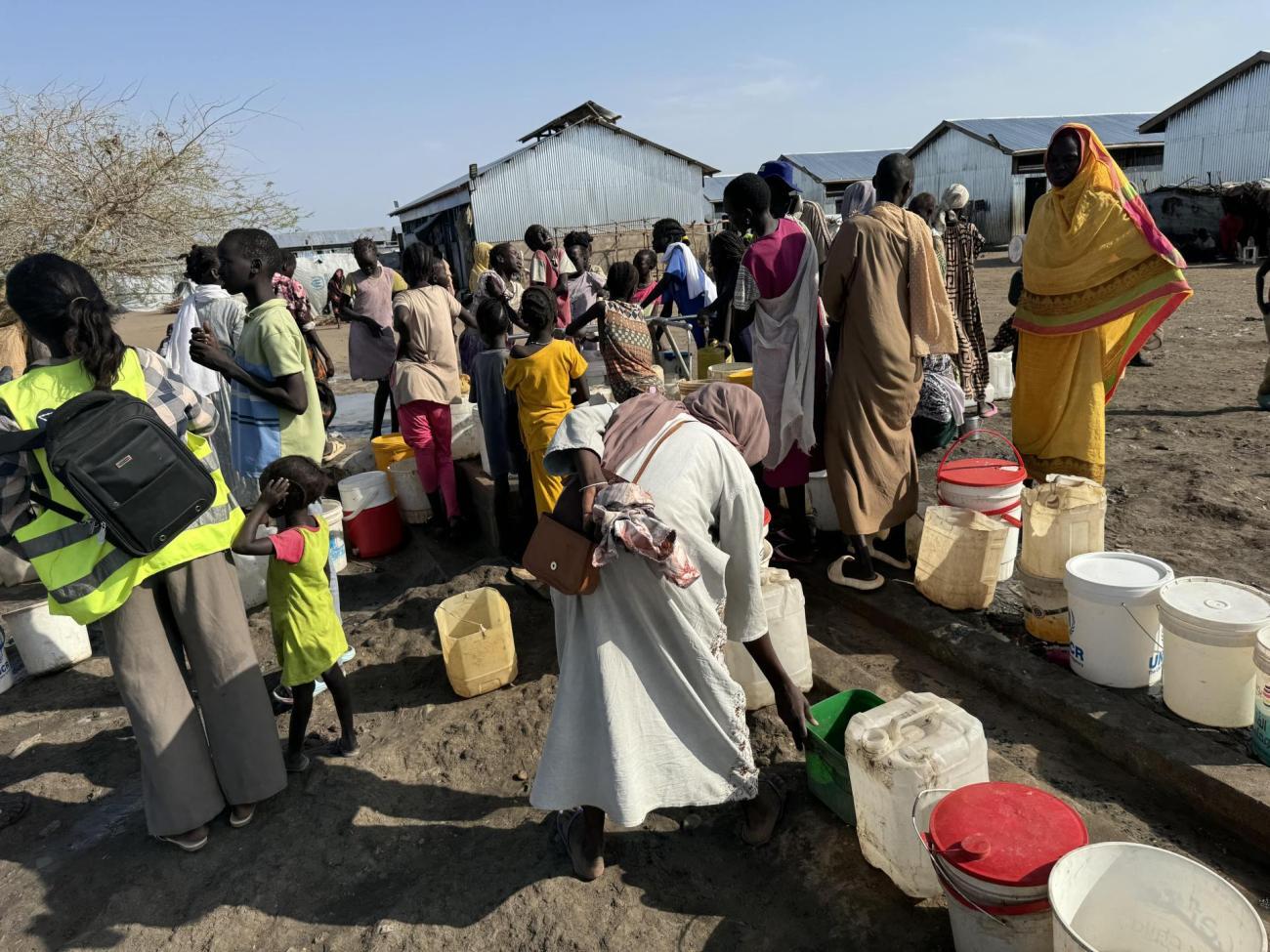
The solarized system not only secures safe water for displaced families in Renk but also helps restore dignity, reduces risks for women and children
When war forced thousands of people to flee Sudan in April 2023, Renk County in South Sudan became the first refuge for exhausted families who had walked for days to cross the border. They arrived with nothing but their children, the clothes they carried, and the hope of finding safety. Among their most urgent needs was something many people take for granted: safe drinking water.
At first, water trucking was the only way to keep people alive. Trucks brought limited quantities from the few water sources available. Though essential, this emergency measure was costly, and difficult to sustain due to shortage of funds, logistical challenges and accessibility problems during the rainy season which complicated meeting the needs of tens of thousands of people arriving daily. Women and girls were at particular risk, often forced to walk long distances to fetch water if trucking could not keep up, exposing them to threats along the way.

To create a more cost-efficient and environmentally friendly solution, the International Organization for Migration (IOM), with support from the European Civil Protection and Humanitarian Aid Operations (DG ECHO) and the South Sudan Humanitarian Fund (SSHF), designed and installed a solarized hybrid surface water treatment system. Commissioned in May 2024, the system now draws water directly from the Nile, treats it to minimum quality standards, and distributes it through a pressurized pipeline to the Renk Transit Centre and surrounding communities. It produces over 450,000 liters of clean water each day, enough for more than 22,500 people. Operational costs have dropped dramatically from USD 9 to USD 1 per cubic meter per day, while eliminating the heavy reliance on fuel and cutting emissions related to the humanitarian response. Since its launch, the system has ensured reliable access to safe water for over 200,000 displaced men, women, and children in Renk.
The investment has already proven highly economical. Continuing with diesel pumping and water trucking would have cost around USD 120,000 each month, or about USD 1.8 million between May 2024 and today. In comparison, the solarized system achieved full return on investment in only three months. This rapid payback highlights the strong economic case for solarization alongside its environmental and operational benefits.
For Hajah Abdarahman Mohammed, a returnee from Sudan currently living in the Renk Transit Centre, this initiative has eased some of the daily hardships. “Life in the Transit Centre is hard but having free water every day has lessened the burden for my family and many others. I cannot imagine how we would have managed if we had to buy water. Our children are healthier, and women have more time to care for their families.”
With ECHO and SSHF support, what began as an emergency response has transformed into a reliable and sustainable lifeline. The solarized system not only secures safe water for displaced families in Renk but also helps restore dignity, reduces risks for women and children, and offers a highly cost-efficient, green model that can be replicated in other crisis-affected communities.



UN entities involved in this initiative
Goals we are supporting through this initiative