The girl I am, Bugeny’s call for change for the girl-child

2gether 4SRHR is a joint UN regional program supported by the Government of Sweden, aimed at advancing sexual and reproductive health and rights for all
Bugeny 18, sat on the worn wooden bench outside her Secondary School, staring at the open road ahead. The sun cast long shadows over the schoolyard as she tightened her grip on the paper in her hands, a poem she had written the night before. Her heart pounded.
She was about to stand in front of her classmates, teachers, and community members to perform words that felt almost too raw, too personal.
She wasn’t just reciting a poem. She was telling her story.
Breaking the Silence
Growing up in Renk County, Bugeny had seen too many of her friends disappear from school overnight, forced into marriages they never asked for, their dreams replaced with duties of wifehood and motherhood before they had the chance to truly live.
She had watched it happen again and again, bright, hopeful girls stripped of their ambitions, their futures determined by cultural traditions they had no say in. Some tried to resist, but the pressure was overwhelming.
And now, here she was, standing in front of a crowd, preparing to say out loud what so many had been afraid to voice.
As she took the stage, her voice trembled at first.
"Marriage should be a choice, not a sentence," she began, her words cutting through the hushed murmurs of the crowd. She spoke of young girls pulled from classrooms, their school uniforms abandoned, replaced by traditional wedding garments they had no desire to wear.
Bugeny knew she wasn’t just speaking for herself; she was speaking for the thousands of girls who become married every year.
Her words hung in the air. And then, applause. A ripple of emotion spread through the crowd. Some nodded in agreement, others wiped away tears. At that moment, Bugeny realized that she had done something powerful. She had started a conversation.
The Drive Behind Her Advocacy
Bugeny’s efforts are part of a broader mission—one supported by 2gether4SRHR, a joint UN regional programme, supported by the Government of Sweden, that aims to advance sexual and reproductive health and rights for all.
In South Sudan, the median age of sexual debut is 14 years – increasing a young girl’s vulnerability to teenage pregnancy and associated complications, including death, and disabilities from obstetric fistula, sexually transmitted infections, HIV AIDS, and social stigma and isolation. It is estimated that 30% of girls ages 15 - 19 have already been pregnant.
The Battle for Education and Change
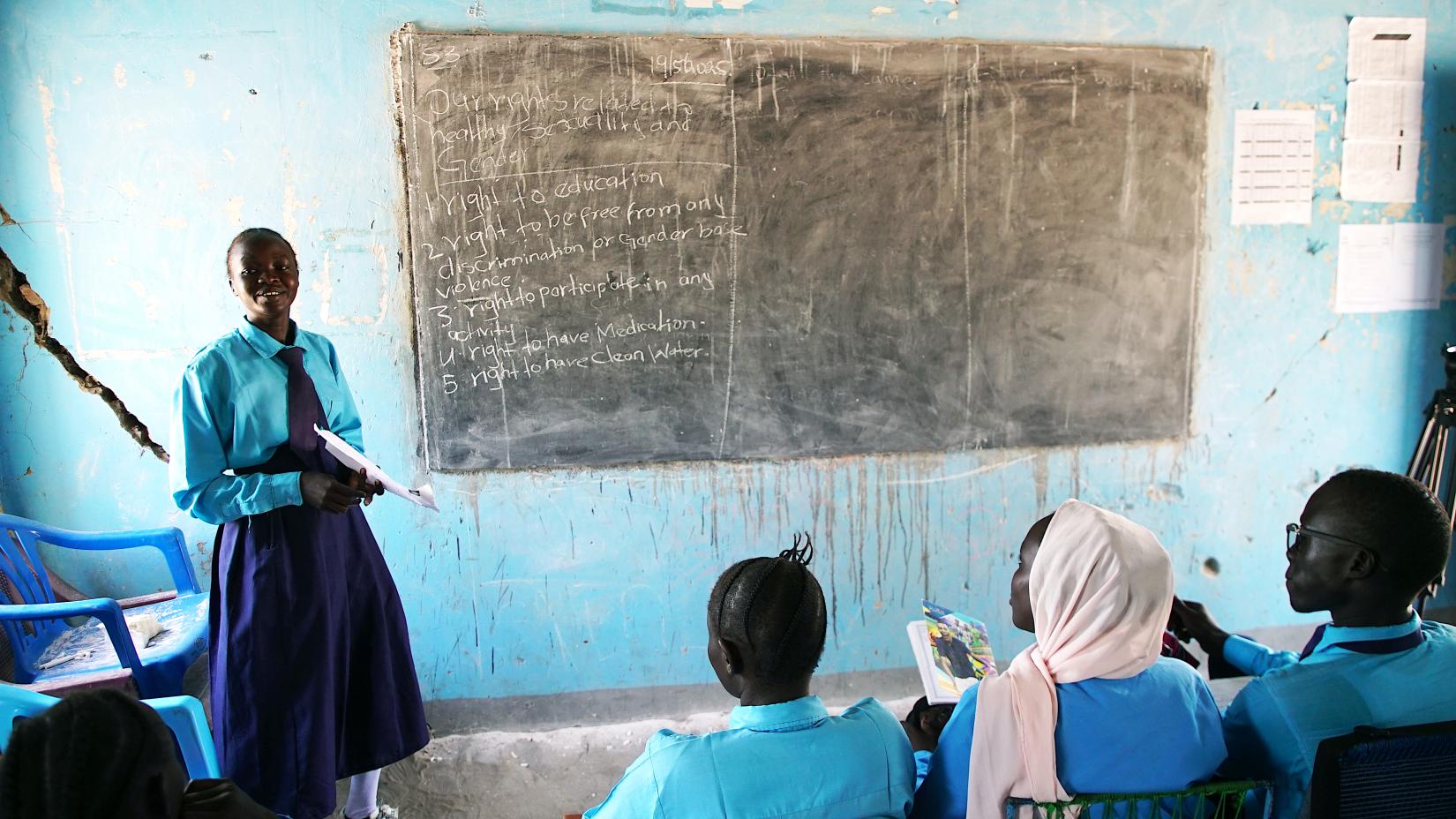
Bugeny’s advocacy wasn’t confined to poetry alone. At her Secondary School, she was one of the leading members of the debate, health, and poetry clubs, platforms for young voices demanding change - tackling issues like gender-based violence, reproductive rights, and the future of young girls in South Sudan.
The Struggles and Small Victories
Despite her passion, progress was slow. Many of the issues she spoke about were deeply rooted in tradition, passed down through generations. While she had the support of her school clubs and youth advocacy groups, resistance still lingered.
During one of her poetry performances, a girl approached her afterward, tears streaming down her face. "You spoke about my life," she whispered. "I thought I was alone."
Another time, a government official listened to one of her debates and later approached her group, offering to discuss potential programs supporting young mothers. Bugeny knew the fight wasn’t just about awareness; it was about action.
The Future She Believes In
One day, Bugeny dreams of standing in a room filled with young girls who never had to fear being forced into marriage. She dreams of a future where education is not a privilege, but a right that no one can take away. The future she believes in is one worth fighting for. And she isn’t done yet.



UN entities involved in this initiative
Goals we are supporting through this initiative